The best swimming class is the one you can actually attend every week. Before comparing coaches or fees, it helps to be clear about three things: when you are genuinely free, how far you can travel, and whether you want a short course or an ongoing commitment. Those answers narrow the field faster than any other filter.
Match the Class to Your Timetable
Consistency turns swimming lessons into a swimming skill. One missed class does little harm; two weeks away breaks the habit, and a swimmer who misses more than they attend makes frustratingly slow progress.
Be realistic about availability. A slot that is technically possible but requires rushing, skipping dinner or negotiating the car every week will not survive the third month. The right class fits a slot that costs you nothing to protect.
Weekend morning slots fill fastest and suit families well. Weekday evenings from 5pm to 7pm work for adults and school-age children. Weekday mornings are quieter, less competitive to book, and suit shift workers, retirees and parents of young children not yet in school. If you are flexible, starting with a weekday slot gives you more venues and coaches to choose from.
Group Lessons vs One-to-One
The format matters as much as the timing.
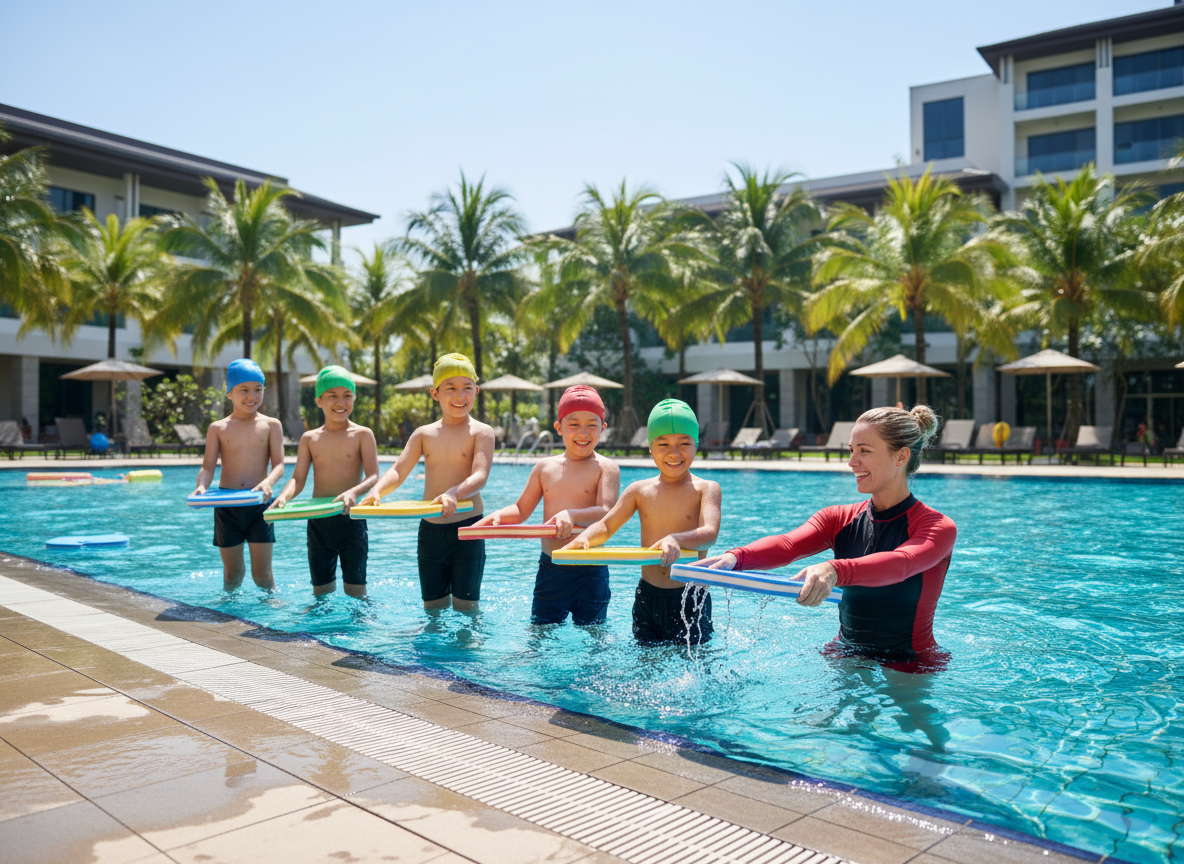
Group classes work well for children comfortable in social settings and adults who enjoy peer motivation. A well-run small group — typically three to five people at a similar level — offers good coaching time per person, built-in encouragement and a lower cost per session. Small-group swimming classes are the format most learners use for most of their progress.
One-to-one lessons suit anxious beginners, children who find a group too fast or too slow, adults who want to accelerate quickly, and anyone working on a specific technical problem. The undivided coaching attention is worth the higher cost when you have a clear goal. Private swimming lessons are especially popular for adults who want rapid early progress before joining a class.
Some learners move between formats as they improve — starting private to build confidence, then joining a group once they can hold their own.
Lessons vs a Structured Course
A lesson is a session. A course is a planned progression from one level to a defined endpoint. Both work, but they suit different situations.
If you need to fix one specific skill — breathing timing in freestyle, or the second kick in butterfly — a handful of focused lessons will sort it. If you are starting from the beginning, or working toward Singapore’s SwimSafer qualification, a structured course with a clear sequence makes more sense. Progress in a course builds on itself; in standalone lessons, continuity depends on the coach’s notes and memory.
Children generally benefit from course-based learning. Adults often start with a short course and switch to periodic lessons once they are competent swimmers who simply want to maintain or refine.
Location: Choose Reachable Over Excellent
The most convenient pool that gets used is better than the best pool that becomes a chore to reach.
Public swimming complexes managed by Sport Singapore are spread across the island, with facilities in nearly every estate. They are affordable, well-maintained and consistently regulated. Swimming near me helps locate certified coaches in your area, and Singapore swimming complexes lists the main public facilities by location.
Condominium pools offer the shortest commute for residents. Many coaches come directly to your condo pool, removing travel entirely. Condo swimming lessons are a popular arrangement for families who value convenience. If you live in a condo and plan to use private lessons, confirm with your building management that visitors coaching on-site is permitted.
If your workplace or your child’s school is near a pool, check whether lessons are available at those hours. The most sustainable class is the one that fits around something you are already doing.
Practical Steps to Find the Right Class
- List your genuinely free slots for the week. Not the ones that might work — the ones that definitely will.
- Map the pools within fifteen minutes of home or work. Most people stay consistent within that radius.
- Decide on format. Group or private, standalone lessons or a full course. If unsure, contact a coach — most will give honest advice about what suits your level and goals.
- Book a trial lesson before committing to a full term. One session tells you whether the coach, pool and timing actually work for you.
- Protect the slot like any other appointment. Swimming progress is cumulative. Rescheduling frequently is the most common reason adults stall.
Common Scheduling Mistakes
- Choosing a slot that is aspirational rather than reliable. The 6am class sounds disciplined in week one and becomes a source of guilt by week three.
- Picking the closest option without checking level groupings. A class full of swimmers much stronger or weaker than you is frustrating for everyone. Ask about level matching before booking.
- Assuming weekends are the only option. Many adults find weekday evening lessons easier to protect from competing commitments than weekend mornings.
- Stopping over school holidays and not restarting. A child who swims for ten months and takes two off every school break loses a meaningful fraction of what they built. Even informal practice during the break maintains feel for the water.
- Treating the first class as the final decision. If the timing, pace or location turns out to be wrong, change it. The cost of switching early is far lower than months of sessions you resent attending.
Getting Started
Once you know your available slot and preferred location, find a swimming class that matches. Most providers will place you at the right level at enrolment — if they do not ask, bring it up yourself. If your child has additional needs or requires a specialist approach, special needs swimming connects families with coaches experienced in adaptive instruction. For private swimming lessons, a one-to-one arrangement lets you set the time and location far more flexibly than a group class.
The step that trips most people up is not finding the right class — it is protecting the schedule once they have it. A class that genuinely fits your week is the class worth staying in.
Frequently Asked Questions
How often should a beginner attend swimming classes?
Once a week is the minimum for meaningful progress. Twice a week is significantly better — the extra session halves the time between practices, which is when skills consolidate.
What time of day is best for children’s swimming classes?
Most children swim better earlier in the day, before school fatigue sets in. Morning and early afternoon slots tend to produce better focus and faster progress than late evening ones.
Is it better to start with private lessons or a group class?
Nervous beginners and children with attention or confidence challenges usually progress faster with one-to-one lessons initially. Sociable children who are comfortable in groups can often go straight into a class without that step.
How do I know if a swimming class is the right level?
A good provider will assess your level before placing you. Ask specifically whether you will be with others at a similar stage. A single trial lesson tells you quickly whether the pace and teaching style are right.
What if the available slots do not suit my schedule?
Ask about a waitlist — slots that are fully booked in peak periods often open up within a few weeks. A coach who comes to your condo pool can sometimes offer more flexible times than a fixed-venue provider. If nothing fits, a private lesson is often easier to schedule around than a fixed group class.


Leave a Comment