
Pregnant Can Swim: Choosing an Antenatal Aqua Class
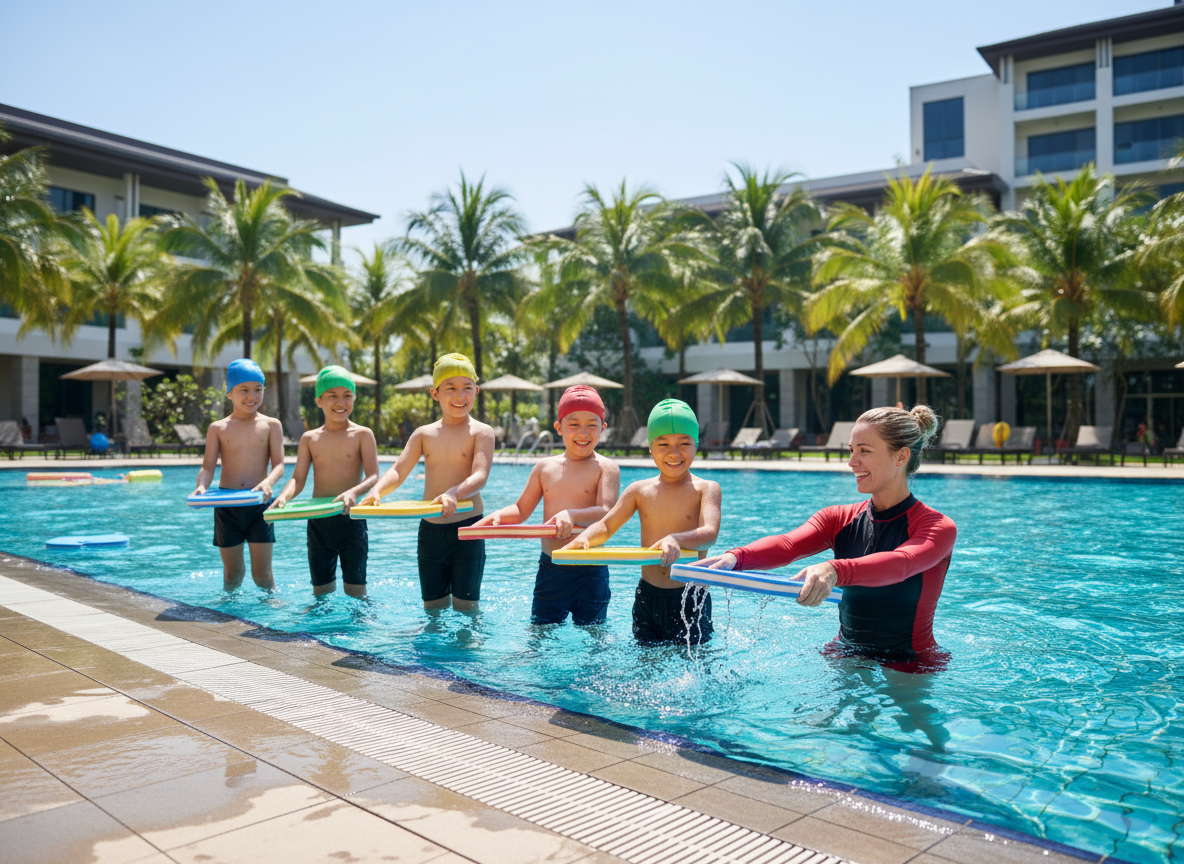
In most uncomplicated pregnancies a pregnant woman can swim, and many find it the most comfortable exercise available because the water carries their weight. If you want a class rather than solitary lengths, look for an antenatal aqua session in shallow, cool water with an instructor who asks how far along you are before you get in. The practical adjustments are small: steps rather than the ladder, no diving or jumping, and drop breaststroke if your hips hurt. But this is a swimming school writing, not a doctor. Speak to your midwife or obstetrician first, and follow their advice over anything here.
What a Good Class Looks Like

- The instructor asks about your pregnancy before the session, not after. Trimester, any complications, anything your doctor has said.
- Shallow, standing-depth water at a comfortable temperature. Not a hot pool.
- A lifeguard on duty, always.
- Wide steps with a handrail rather than a ladder.
- Modifications offered openly — a good instructor gives you two versions of every movement and does not comment on which you choose.
- Nobody encouraged to work to exhaustion. You should be able to talk throughout.
- An off-peak time if you want one. A quiet pool is calmer and easier to move around.
Questions to Ask When You Book
| Ask | What you want to hear |
|---|---|
| Is this class specifically antenatal? | Yes, or an honest “no, but you’re welcome” |
| How deep is the water? | Standing depth throughout |
| Is the pool heated? | Cool to comfortable — not warm |
| Is a lifeguard on duty? | Yes, always |
| Is the instructor trained for pregnancy? | A named qualification |
| Can I stop whenever I want? | Obviously yes |
What Changes in the Water
Your buoyancy shifts as the bump grows, so your legs may sit lower. Normal, not a technique failure.
Your balance on the deck changes before it changes in the water, and wet tiles are unforgiving. Walk.
Ligaments soften, so joints move further than they used to. This matters most in breaststroke, where a wide kick loads the pelvis and the inside of the knee.
You may feel short of breath at efforts that used to be easy. Slow down rather than pushing.
Strokes, Adjusted
- Freestyle. Usually comfortable throughout. Ease the pace as breathing changes.
- Backstroke. Fine early and mid pregnancy. Some women are advised to limit time flat on the back later on — ask your doctor.
- Breaststroke. Often the first stroke to go. If your hips, pubic bone or lower back hurt during or after it, that is pelvic girdle pain. Change stroke and see a women’s health physiotherapist. Do not push through it.
- Butterfly. Rarely comfortable. Most swimmers drop it.
- Sculling, gentle kicking, floating. An excellent fallback at any stage.
Get Out and Call Your Doctor If
This list is not exhaustive and does not replace what your own doctor tells you. Stop and seek medical advice for:
- Vaginal bleeding or any fluid loss
- Regular painful contractions
- Chest pain, palpitations, or breathlessness before exertion
- Dizziness, faintness, or a headache that will not settle
- Calf pain or swelling
- Reduced fetal movement
- Any pain that changes how you move
Do not finish the class. Get out.
Never
Hold your breath underwater, swim underwater lengths, or attempt hypoxic breathing. Prolonged or repeated breath-holding, particularly after hyperventilating, causes shallow-water blackout — a silent, warningless loss of consciousness that has drowned strong swimmers in supervised pools. There is no reason to attempt it, pregnant or otherwise.
Avoid scuba diving throughout pregnancy. Avoid hot tubs, saunas and hot outdoor pools in the middle of the day, which raise core temperature.
Never dive or jump in. Feet first, by the steps, holding the rail. And never climb out on your arms.
Kit

A maternity-cut one-piece or long-bodied tankini in polyester or PBT survives chlorine and stays put. Reach both arms overhead in the changing room — if the suit pulls down at the shoulders, it is cut too short in the body. Wide straps, not thin ones; your bust has changed and thin straps will hurt within weeks.
Pool shoes or sandals for the deck. Keep a bottle on the wall — you sweat in the water and never notice.
We cover swimwear properly in choosing pregnancy swim suits.
Common Mistakes
- Assuming swimming is so gentle no rules apply. The deck is where people fall.
- Continuing breaststroke through hip pain. Pelvic girdle pain worsens quickly when ignored.
- Booking a warm-water class. Overheating is the main thermal risk.
- Not telling the instructor you are pregnant. They cannot adapt what they do not know.
- Buying a swimsuit at eight weeks. Your shape at thirty weeks is different.
- Working to exhaustion. You should be able to hold a conversation.
If You Have Never Swum
Pregnancy is a reasonable time to learn. The water is kind and the effort is self-limiting. Learn in a lesson, in shallow lifeguarded water — never by yourself in a deep pool.
Quiet, unhurried, one-to-one water time suits most pregnant beginners better than a busy class, which is the argument for private swimming lessons. Those who want company will find antenatal aqua sessions at many pools, and ordinary swimming classes are usually happy to accommodate. If your building has a pool, gentle practice between sessions helps — see learning in a condominium pool. Those who prefer no-impact conditioning without strokes might look at deep water aerobics, with medical clearance first. To find an off-peak pool nearby, use swimming near me.
Public pool timings are published by ActiveSG.
Frequently Asked Questions
Is swimming safe in all three trimesters?
Many women swim comfortably until close to their due date. Whether it is right for you is a question for your midwife or obstetrician, who knows your pregnancy.
Which stroke should I avoid?
None universally. Breaststroke is dropped most often, because the kick aggravates pelvic girdle pain.
Is chlorinated water a concern?
Normal, well-maintained pool water is not generally regarded as a problem. A strong chemical smell usually indicates poor maintenance; swim elsewhere.
Can I do aqua aerobics instead of swimming?
Yes, and many find it easier late in pregnancy. Get medical clearance, avoid overheating, and tell the instructor.
What about hot tubs?
Avoid them, along with saunas and hot pools. Raised core temperature is best avoided.
Can I learn to swim while pregnant?
Yes. Learn in a lesson, in shallow lifeguarded water, with a coach who knows you are pregnant.



[…] though group swimming classes and antenatal aqua sessions suit swimmers who like company — see choosing an antenatal aqua class. Those with access to a home pool can practise between sessions; see swimming safely while pregnant […]